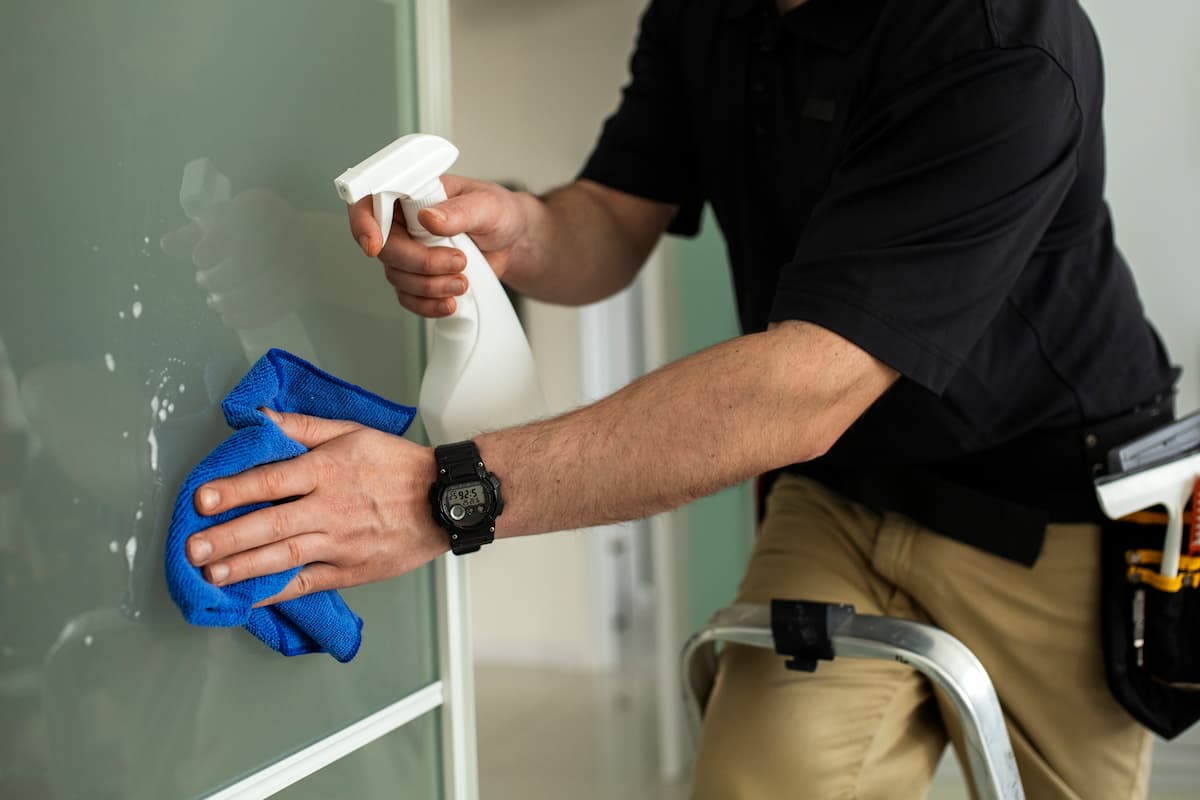
Keeping a shopping centre spotless is not about “mopping the floors”, it’s about ensuring a safe and enjoyable experience for thousands of people each day, across very different times of the day. When cleaning is well planned, it’s reflected in the shine of the surfaces… and also in less incidents, complaints and deterioration of the facilities.
This guide brings together a practical method for organising the cleaning of shopping centres by implementing professional criteria: zoning, frequencies, protocols, machinery, quality control and key points for choosing a supplier that won’t let you down. At Weldon, we tend to work with the same approach: realistic planning + supervision, so as to ensure a stable result, rather than a one-off outcome.
What makes the cleaning of a shopping centre professional?
A professional service is measured by its consistency, not by a “perfect day” right before a visit. The difference lies in having repeatable procedures in place, carried out by trained staff, using appropriate machinery and with a control system that can detect any deviation before the customer or visitor notices it.
In our case, when we audit a shopping centre, we look for three things: safety (slips, obstacles, glass), health and hygiene (toilets, catering, high contact) and maintenance (floors, joints, furniture, rust). If the plan covers these three layers, cleaning ceases to be reactive and becomes operational.
Critical areas: where the perception of cleanliness is gained or lost
Dirt is not distributed “equally”. Dirt accumulates based on entry flows, weather, catering and contact points. Hence, the first step is to identify impact zones (what everyone sees) and risk zones (what generates incidents).
These are the areas that usually require specific methods and higher frequencies:
- Accesses and entrances: sand, rain, leaves, footprints and saturated carpets.
- Main corridors: isolated stains, chewing gum, tread marks and spills.
- Toilets: visible hygiene, smells, replacement and disinfections in shifts.
- Catering areas: grease, rubbish, tables, sticky trays and floors.
- Escalators and lifts: handrails, stainless steel, corners and guides.
- Car park: dust, oils, drips, cigarette butts and lighting points.
- Docks and technical areas: accumulation of cardboard, waste and ‘invisible’ dirt.
The conclusion here is simple: if these areas are under control, the centre is perceived as well maintained, even at peak times.
How to design a cleaning plan that works every day
An effective plan stems from an initial audit: measuring actual square metres by surface type, understanding schedules, peak times and ‘critical moments’ (openings, midday, closings, events). At Weldon, we usually start with a flow map to adjust frequencies without assigning excessive resources.
A useful work schedule combines daily routine, reinforcement, and tasks that require greater frequency. This sequence tends to provide a good outcome:
- Initial diagnosis: surfaces, problem areas, incident history and customer expectations.
- Zoning: divide by areas and assign service levels (high, medium, low).
- Frequencies: what is done per hour, per shift, daily, weekly, and monthly.
- Protocols: procedures by area and by material, with estimated times.
- Staffing: roles, shifts, machinery, consumables, and replacements.
- Control and improvement: checklist, audits, incident log and adjustments.
The key is that the plan is written for a “normal day” and also for a “difficult day”: rain, sales, bank holiday weekends, events or breakdowns. This is where operational maturity is showcased.
Surface protocols: the detail that prevents wear and tear and complaints
Not everything is cleaned the same way. Using an incorrect method may result in cloudiness, streaks, blackened joints, or loss of shine. A professional protocol defines which method is used, with which product, with which machinery, and how it is verified.
As a reference, this table helps to ground typical decisions in shopping centres:
| Element | Standard method | Guiding frequency | Control point |
| Hard flooring (porcelain tiling, polished concrete) | Mechanical scrubbing with controlled dosing | Daily + reinforcement during peak times | No smudges, no stickiness, clean joints |
| Shop windows and glass surfaces | Cleaned with professional tool and dried without streaks | According to visibility and transit flow | No streaks, droplets, checking corners |
| Steel and stainless steel (lifts, handrails) | Microfibre cloths + specific anti-mark product | Several times a day | No fingerprints, no streaks, even shine |
| Bathrooms | Routine per shift + high contact disinfection | Scheduled by time slots | Neutral odour, complete replacement, critical points cleaned |
| Car park | Industrial sweeping/mopping + stain treatment | Weekly schedule + incidents | No dust accumulation, treated stains, checked bins |
In practice, what makes the difference is a simple standard: ‘always the same’. That consistency is achieved through clear procedures and supervision, not improvisation.
Machinery, tools and consumables: where to invest
Machinery is not an ‘extra’: for large surfaces, it is a prerequisite for efficiency. Choosing wisely reduces time, noise, consumption and repetition. At Weldon, we prioritise equipment that delivers consistent results with less friction for the team.
In a shopping centre, it usually makes sense to cover these needs:
- Mechanical scrubbing for corridors and large transit areas.
- Industrial sweeping/vacuuming for car parks, accesses and technical areas.
- Glassware tools for shop windows and high areas (depending on accessibility).
- Well configured cleaning trolleys to reduce trips and improve order.
- Microfibres and consumables differentiated by area to prevent cross-contamination.
At the same time, product management must be precise: dosing, data sheets, storage and material compatibility. A good system prevents excess chemicals and helps maintain a neutral odour, something that visitors notice immediately.
Hygiene and disinfection: balancing safety and user experience
In shopping centres, the real focus is on toilets, restaurants and high-contact points. Disinfection works when it is integrated as a routine, not as a ‘campaign’. The important thing is to define critical points, frequency per time slots, and verification.
A practical way to structure it is to separate three layers:
- Visible hygiene: bins, mirrors, floors, sinks and cubicles, all free of stains.
- High contact: handles, push buttons, handrails, taps, hand dryers, button panels.
- Odours: ventilation, treatment of source points and maintenance of drains.
The closure is operational: when the team knows what to check during each cleaning session, the bathrooms go from being a problem to being a point of confidence for the centre.
Organisation by teams: shifts, reinforcements and supervision
Cleaning in a shopping centre is a living service. Maintenance shifts (during opening hours) must be combined with intensive tasks (before opening or after closing) and reinforcements during events. At Weldon, we usually define clear roles so that the team can work efficiently and judiciously, without duplication.
A typical structure includes:
- Maintenance workers by area (corridors, toilets, food court).
- Machinery equipment in less busy areas for floors and large surfaces.
- Supervisor with scheduled rounds and incident log.
- Flexible reinforcement for rain, sales, weekends or commercial promotions.
Furthermore, training should not be generic: centre materials, protocols by area, dealing with the public, wet floor signage and incident management. This ensures discretion and efficiency without interfering with commercial operations.
Quality control: how to ensure standards are met
Quality is maintained through a simple system: checklists for each area, audits, and a clear communication channel. The important thing is that control should not be ‘policing’, but rather a tool for correction before it becomes a complaint. In our daily work, a short and frequent verification circuit is usually the most useful approach.
Practical indicators that work in shopping centres:
- Incidents by area (toilets, catering, access, car park).
- Response time in case of spills or warnings.
- Visual audits with scoring for critical areas.
- Replacement (complete consumables in key time slots).
- Customer and public complaints and comments (when recorded).
If the system includes review and improvement, the standard ceases to depend on ‘who is working today’ and becomes dependent on the method.
How to choose a cleaning company for shopping centres
Choosing a supplier should not be based solely on the price. In a shopping centre, what you pay for is continuity, responsiveness and control. A reputable supplier will be evident in how they diagnose, how they schedule schedules, what they propose for critical days, and how they document quality.
Questions you should ask before hiring:
- How do you design the plan and what data do you use (metres, flows, surface areas, events)?
- What does supervision include and how often is it audited?
- How do you manage reinforcements due to rain, sales or campaigns?
- What machinery is assigned and what maintenance plan is drafted?
- How is quality recorded and how are incidents reported?
If you are comparing options, it may help to review how the service approaches cleaning shopping centres with a focus on actual operations: planning by time slots, protocols by area, and a control system that maintains consistent standards.
When the plan is well designed, cleaning becomes part of the centre’s experience: work is done in a quick and orderly manner, without interference. The best sign of professional service is that visitors do not ‘think’ about cleanliness… because everything is as it should be. If you start with an honest audit, set realistic frequencies, and implement quality control, you will have a safer, more pleasant, and easier-to-maintain facility in the long run.